Vibe News 氛圍新聞
Stay updated with the latest in AI, vibe coding, and Hong Kong tech
Showing 18 results

Brenton Avdulla relishing link-up with seven-length return winner Bustling City at Sha Tin
Jockey Brenton Avdulla will pair back up with remarkable first-up winner Bustling City at Sha Tin on Sunday and the Australian is hoping David Hayes’ excitement machine can continue helping him build on a “competitive” start to the campaign. Avdulla notched up a third winner of the campaign when Golden Fortune roared to success at Happy Valley on Wednesday night and will look to ride that momentum into a marquee ride aboard Bustling City in the Class Three Lau Fau Shan Handicap (1,200m). Ending...

Hong Kong racing tips and early analysis: Sha Tin, Sunday, October 11
Hong Kong racing expert Luke Middlebrook provides race-by-race analysis for the Sha Tin race meeting on Sunday, October 11.

Man arrested after red paint splashed at joint office of ‘unhelpful’ lawmakers
Hong Kong police have arrested a man for allegedly splashing red paint at the joint office of two lawmakers, accusing them of being unhelpful. A source said on Thursday that police arrested a 66-year-old man over the incident at the shared office of Kowloon East lawmaker Bill Tang Ka-piu and insurance-sector legislator Chan Pui-leung. The force said it received a report at 6.40am from a security guard at Sau Mau Ping Estate that red paint had been splashed at an office in the estate’s Sau Chi...

Did Portuguese breads and pastries shape Hong Kong’s most iconic baked goods?
Francisco Oliveira, the Portuguese founder of bakery brand Santa Nata, was reminded of home when he tried Hong Kong’s iconic pineapple bun for the first time. “When I ate the pineapple bun, I immediately thought of the pao de deus,” he says, referring to a popular Portuguese baked treat he has eaten since childhood. Translated as “bread of God”, pao de deus is a brioche found in pastry shops across Portugal. It is generously slathered with sugar and coconut before baking to create a golden,...

Naked, gilded Trump statue goes on display at EU Parliament
A gilded statue of US President Donald Trump naked went on display in the European Parliament building in Strasbourg on Tuesday. Danish artist Jens Galschiot is exhibiting the satirical statue, titled Orange Plague and also known as King of Injustice, at the parliament’s headquarters in the eastern French city. It shows the president sitting naked on the shoulders of a much smaller man. In his hand, he holds a long golf club. Including its pedestal, the statue is around 2.5 metres tall and,...

Doctor reveals 4 dietary traps that spike blood sugar

The Art Basel and UBS Survey of Global Collecting 2026 reveals Gen Z as the highest-spending generation
This year's survey explores how high-net-worth collectors begin building their collections, highlighting the influence of family, rise in younger generations' purchasing activity, evolving attitudes toward privacy, and the growing use of digital and AI-enabled tools for researching their...
The Art Basel and UBS Survey of Global Collecting 2026 reveals Gen Z as the highest-spending generation
This year's survey explores how high-net-worth collectors begin building their collections, highlighting the influence of family, rise in younger generations' purchasing activity, evolving attitudes toward privacy, and the growing use of digital and AI-enabled tools for researching their purchases HONG KONG , Oct. 8, 2026 /PRNewswire/ -- The Art Basel and UBS Survey of Global Collecting 2026 by Arts Economics, reveals fresh insights into the evolving behaviors and motivations of high-net-worth (HNW) collectors. Conducted by Arts Economics in collaboration with UBS, the survey draws on responses from 3,100 HNW individuals across 10 key markets: the US, UK, Mainland China, Hong Kong SAR, France, Australia, Germany, Japan, Brazil and Singapore. Dr Clare McAndrew, Founder, Arts Economics: "This research let us look beyond what high-net-worth collectors buy to how they use their collections and what really matters to them about owning art. Attitudes towards privacy and access varied widely, challenging some established assumptions. Many purchases are driven less by the conspicuous consumption traditionally linked to the market than by a desire to build connections within close networks, where status comes less from price than from rarity, provenance, originality, and discovery. Restricting access does not remove a collection's signaling power; exclusivity can be part of the signal. Perhaps surprisingly, the youngest collectors were the most private, both in person and online. Gen Z collectors were the least likely to share details of their collections publicly online, preferring invitation-only spaces, with privacy central to their personal and cultural identity." Adrian Zuercher Adrian Zuercher, Co-Head Global Asset Allocation, Co-Head Global Investment Management APAC, UBS Global Wealth Management CIO: "The Art Basel and UBS Survey of Global Collecting 2026 by Arts Economics reveals a highly engaged and increasingly informed collector base across Asia. Mainland China recorded the highest buying intentions of any market surveyed, with 53% planning to acquire art over the next year, with high shares also found in Singapore (48%) and Japan (41%). Collectors in Mainland China, Hong Kong SAR and Singapore are among the most research-driven and advice-oriented globally, highlighting the growing sophistication of collecting across the region." Key findings of the survey: Gen Z emerges as the highest-spending generation of HNW collectors: In 2025 and the first half of 2026, Gen Z spent more on fine art than any other generation surveyed, with spending levels more than twice as high as those of older generations. Gen Z also made up nearly half of all collectors buying artworks priced above USD 1 million in 2026. Family remains an important foundation for collecting: The survey offers the first dedicated analysis of how HNW collectors begin building their collections and finds that family is the most common route to starting a collection. While 28% of collectors reported family as their primary route into collecting, the share rose significantly to 40% among Gen Z. Almost 90% of Gen Z collectors who inherited works retained them, underscoring the enduring role of family legacy in shaping collections across generations. Uniqueness and rarity stands out as the leading priority in owning art : Across generations, uniqueness and rarity ranked as the most important aspects of ownership (43%), ahead of owning works respected by experts (23%) or owning something admired in collector circles (22%). Uniqueness mattered more to Gen Z collectors (48% versus 38% of Baby Boomers). Collectors have become strongly research-driven in their purchasing decisions: 72% of HNW collectors conducted moderate or significant independent research before purchasing art, up from 62% in 2025, and rising to 80% among Gen Z collectors. Digital sources and AI-enabled research tools continue to gain ground: 58% of HNW collectors used online resources for advice and recommendations, while the use of apps and AI tools rose to 22%, up from 4% in 2024. Collectors continue to diversify their interests across art and collectibles: Fine art accounted for 33% of total spending across art and collectibles categories in 2026. Gen Z collectors were the highest spenders across virtually every category and, together with boomers, displayed the broadest collecting interests, with 42% of Gen Z collectors and 39% of Baby Boomers purchasing across at least two additional collecting categories outside of fine and decorative art in the last year. Philanthropy and legacy planning remain important priorities: The report found that 23% of HNW collectors said they planned to donate works to museums in the coming year, while many others said they intended to support artist prizes, residencies, foundations, or private museums. Family legacy continues to play a central role in both building and preserving collections, with many collectors focused on passing collections to future generations. Links www.ubs.com/artmarket About UBS and contemporary art Global Lead Partner of Art Basel, UBS has a long history of supporting contemporary art and artists. UBS seeks to advance the international conversation about the art market through its global lead partnership with Art Basel, and as co-publisher of the Art Basel and UBS Global Art Market Report and the Art Basel and UBS Survey of Global Collecting. UBS also supports some of the world's most important arts institutions, events, and fairs. The firm also has one of the world's most significant corporate collections of contemporary art. The UBS Art Advisory supports the firm's UHNW and family offices clients with impartial advice across the lifecycle of collecting. About UBS UBS is a leading and truly global wealth manager and the leading universal bank in Switzerland. It also provides diversified asset management solutions and focused investment banking capabilities. UBS manages 7.3 trillion dollars of invested assets as per the second quarter 2026. UBS helps clients achieve their financial goals through personalized advice, solutions and products. Headquartered in Zurich, Switzerland, the firm is operating in more than 50 markets around the globe. UBS Group shares are listed on the SIX Swiss Exchange and the New York Stock Exchange (NYSE). www.ubs.com/media

Open Source Adobe Suite Alternative Created Using AI Vibe Coding
A veteran software engineer has released an open-source recreation of seven Adobe apps via AI-assisted vibe coding, sparking discussions about the future of SaaS subscriptions.
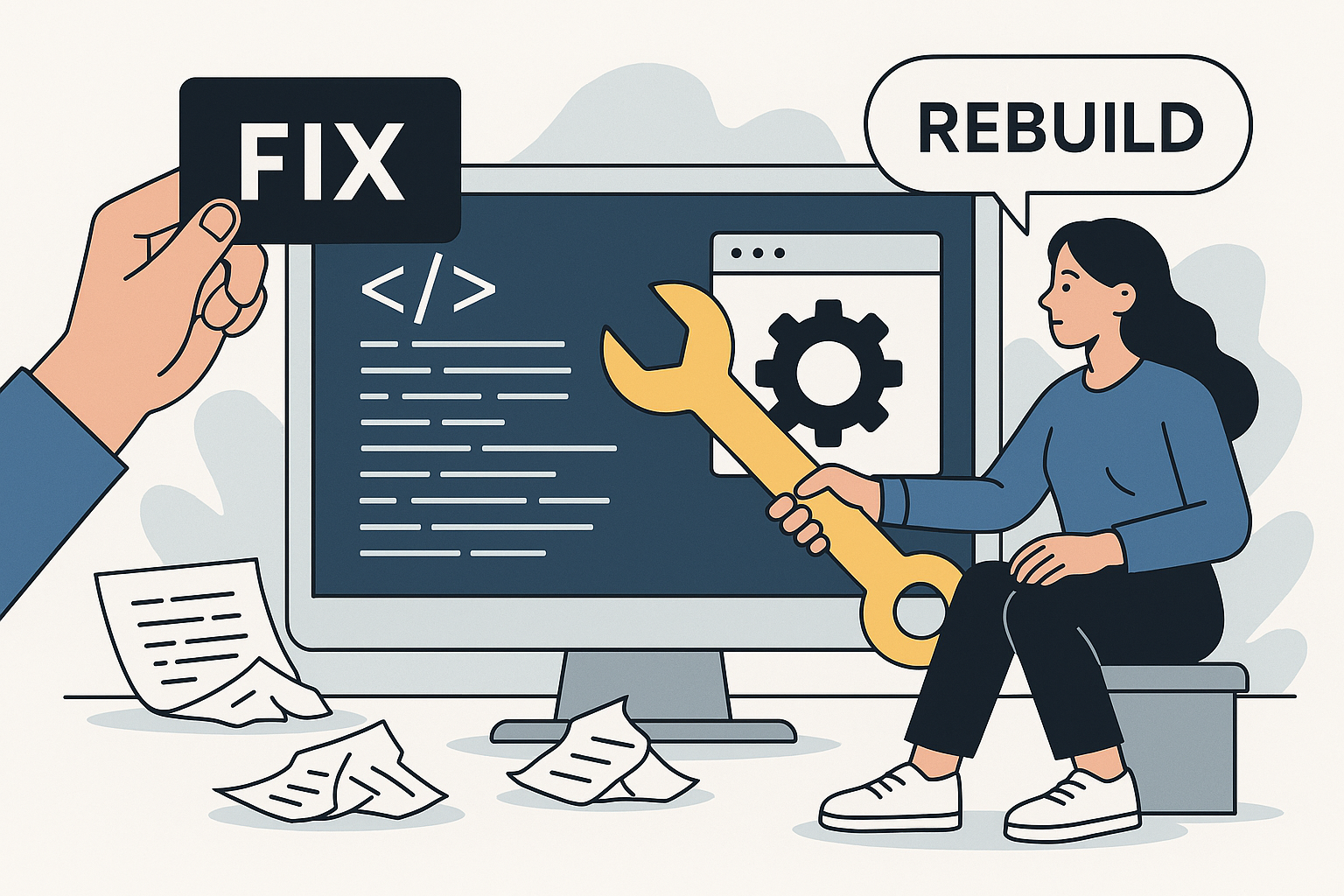
Best Vibe Coding Cleanup Specialists in the USA: Fix or Rebuild?
Vibe coding cleanup should start with a component-by-component audit to decide what to keep, what to fix, and what truly needs rebuilding.

SAP Connect 2026: Validating on a working vision of the autonomous enterprise
You know you’ve been covering a company for a while when the post-keynote press & analyst Q&A session starts… and the chief communications officer looks around the room before saying: “any questions?”… and then the eyes focus on you. Mostly, these things are spontaneous enough, and any members of the press worth their salt will have plenty to ask. But, for insurance, the comms team often “seeds” the first question or two with journalists that they know. Having known SAP Christian Klein since he was a product manager, the microphone miraculously made its way to my side of the room and (apologies for lapsing into first person) I was able to put what was almost the first question forward. Just for a bit of theatre – and with the backdrop of autonomous enterprise messages that Klein and co spelt out in the day #1 SAP Connect keynote and its technology propositions to businesspeople and software engineers alike – I’ll include my question text below also. Me: Thanks, hi guys. Um, Adrian Bridgwater here, freelance for Computer Weekly. Christian, you’ve talked a couple of times about coding tasks and fitting them into the appropriate ontology. So is the message to software engineers now: stop coding basic transaction logic and start writing context-aware microservices? I’m not talking about vibe coding; I’m talking about the shift to agentic code control… does that sum up your message to developers? Klein: Yeah, you could join my next portfolio review with the team and Manoj! Um, yeah, I mean, look, my next speaking engagement is at the German SAP user conference, and they already know what our feature roadmap looks like going forward and what features will be agents. So, basically, yes, we are giving them this guidance [as you have suggested]. But we will still explain to our users that when they need to build a few features, there are options. Let’s not forget, this is ERP, and it’s the most feature-rich ERP out there. But there may be times when developers code new features, but only if (for example) there’s some data missing and there are new compliance requirements, or something has happened and the system of record doesn’t have a feature it needs today. But what we are saying to developers is: not to code [entire] features; they might now be more focused on tasks on how to make the UI look better, or just how to get a feature to reach a certain capability when the data model is already there in the process model. When they need to do other tasks, they can actually turn their development capacity to agents. Think about that. This is a mindset change, and we will go on this journey with our customers. When engineers think about a new feature they want, we want to be able to say, actually, we have a much better idea i.e. let’s really build this in an agent and embed it in your edge and the AI layer. All of the above (after the question) are Klein’s words. Delivering deterministic workloads SAP’s chief product officer Manoj Swaminathan added to Klein’s answer and said that, “Specifically to add to that, we have been pretty good in terms of providing the deterministic workloads for many of these processes today, and we understand the extensions that have been done by our customers as well through the input they’re getting from Signavio. Models are really, really good for their ability to be able to reason about decisions.” Swaminathan said that SAP is now enriching this work with context, and that becomes the foundation. “We’re enhancing systems of record with this new ability or this new layer that we are providing. So engineers (and ultimately users) get an enhanced system of intelligence and systems of action that feeds in with non-deterministic behaviours as well through models with SAP data context. That is what we are investing in from an engineering perspective,” he added. SAP COO Sebastian Steinhaeuser Speaking to SAP COO Sebastian Steinhaeuser , two things are immediately apparent: 1) he plays a central role speaking to users, customers and the SAP board and acts as a centralised compendium of knowledge and 2) he’s extremely on-message in terms of the way the total SAP platform now works. Steinhaeuser detailed the new, unified strategy for SAP centred around a “UI for AI,” where the entire stack is delivered as a single, SAP-managed service. This approach means SAP consolidates all components and functions, such as identity services, into one cohesive system. The shift involves consolidating various components into a singular “business AI platform.” This platform now serves as the foundation for the entire autonomous enterprise stack, including all agents and Joule work. “A primary benefit is the SAP-managed deployment model, which handles identity, authorisation, and setup, enabling a one-click deploy experience for customers,” said Steinhaeuser. Steinhaeuser shared a personal anecdote about the dramatic increase in deployment speed now being experienced i.e a decision made on a Monday resulted in a system going live in just three days, and this is a stark contrast to the traditional timeframe where we might check on a project plan after three months. A new NetWeaver moment Steinhaeuser predicted that SAP is on the verge of another “NetWeaver moment” i.e. drawing a parallel to how the original NetWeaver platform spurred a massive increase in development by providing a native experience for extending core SAP systems like R3 and ECC. As explained here on TechTarget , “SAP NetWeaver is an open application server platform that enables organisations to integrate many applications, standardise business processes and edit information as needed. It helps businesses align people, information and processes across organisational and technical boundaries.” The new SAP platform is considered the most complete and streamlined platform offering ever. Key components include Joule Studio, a data cloud for integrating SAP and non-SAP data, and the AI Agent Hub. This suite of tools is expected to significantly empower developers and simplify the creation of applications on the SAP platform,” said Steinhaeuser. Steinhaeuser suggested that the secret sauce of the new platform is the SAP Knowledge Graph. This graph encodes all semantic relationships within SAP’s ecosystem, including the interlinking of ERP tables, fifty thousand public APIs, and numerous private APIs. All documentation and data product knowledge are embedded within this graph, which is accessible to developers via Joule Studio. SAP is also training its own foundation models on its codebase, creating a “context layer” to further simplify application development for customers. Keep the core pure SAP Connect 2026 also threw up the chance to speak to SAP ERP SVP Maura Hameroff , who first underlined how SAP’s continuous customer engagement process works. This battle-tested system enables the company to share its various platform roadmaps and gather input on business priorities for future product development. Keen to explain how developers should approach customisations in, over, across and through the total SAP platform, Hameroff said that the company discourages modification of the ‘core’ system, but not customisation in general. The guiding principle is to “keep the core stable” and build on top when needed. “This allows customers to build specific capabilities tailored to their business processes. This strategy also ensures the core remains stable and allows companies to stay current with standard releases, adhering to policies like ‘N minus one’ or ‘N minus two’, while ensuring their innovations persist through updates,” said Hameroff. “Developers have clear guidance on the boundaries for customisation, as defined by the ‘clean core’ concept and approach.” She further noted that SAP provides “extensive public documentation” that defines a ‘clean core’ and details the tiers for compliant versus non-compliant development. In response to customer and developer feedback, all documentation was recently refreshed to provide more granular tiering and detailed guidance. ERP is the spine of business “Interconnections via MCP servers and API gateways are managed through the platform, ensuring that any development conducted this way automatically adheres to compliance standards and does not modify the core,” explained Hameroff. “With our latest platform developments in relation to AI, you can think of ERP as the ‘spine’ of a company… and AI’s great potential is its ability to unlock the value of this ‘spine’ by leveraging the data flowing through it.” Hameroff used the example of AI acting as a key facilitating tool for integrating unstructured, imperfect data (such as from emails) with the structured data already in SAP systems, a task that was previously manual and labour-intensive. Beyond blueprints… Last but not least, we spoke to Sid Misra , CMO for SAP BTP. Affably engaging from the start, Misra spoke about the context for SAP’s current AI strategy, which stems from the autonomous enterprise vision announcement, initially made at this year’s SAP Sapphire event. “A core component of the ‘autonomous enterprise’ vision involves AI agents designed to supplement SAP’s lines of business applications. These agents are built for specific, end-to-end tasks in areas like procurement, supply chain, and HCM,” clarified Misra. “For six key areas of a customer’s business, SAP has pre-built, pre-templated, and pre-architected agents ready for deployment. These are not just blueprints but functional agents designed to execute entire processes, such as a procurement workflow or case resolutions for late order management.” Misra says that this capability is built upon SAP’s extensive heritage and deep knowledge of customer business processes. Task-specific, industry-specific, complexity-specific SAP codes, builds, and manages these agents, meaning customers do not have to manage them. There are currently over two hundred such agents available. “SAP agents at this level are task-specific, industry-specific, complexity-specific,” noted Misra. “This allows SAP to cater to standardised back-office functions as well as the unique requirements of specific industries like automobile or oil and gas. For example, an oil and gas company’s payroll needs differ significantly from those of a retail shop, and SAP has tailored agents for both scenarios.” Let’s make note here that SAP defines an assistant as the larger entity (than individual agents) that orchestrates a complete, end-to-end business process. An assistant accomplishes its tasks by running multiple individual agents, each designed for a specific task. This hierarchical structure allows for the management of simple, medium, and complex business processes. Underlining all of the above (and the views of all speakers), Misra pointed to SAP’s approach to governance as a critical concern for enterprise customers. He emphasised that SAP agents are described as ‘enterprise-grade assistants’ that operate on ‘SAP-managed infrastructure’ and that this may well be an evolution of the marketing tagline we know so well from SAP with its Run Simple campaign. If SAP Sapphire was the launch of the autonomous enterprise vision, SAP Connect has been designed to show the company wants to now deliver and validate that vision for real world work. We look forward to next year.

Google’s New Playground Aims to Make It Easy to Vibe Code a Game Right in Your Browser
The tech giant just launched Playground, a new site that lets people create games using AI prompts.

Banjo-Kazooie port developer blasts AI vibe coding as retro gaming fills with low-quality ports
A hot potato: Over the past few months, it seems as if fan-made PC ports of console-exclusive retro games have been emerging almost daily. This is because most of them are built either partially or entirely with AI coding tools such as Claude. Amid the wave, the debate over vibe coding has divided retro gaming enthusiasts. Read more

OpenSearch veterans launch Infino. Here’s why it matters for agent builders.
Software vendors like to claim unified systems that act as a so-called single pane of glass for any given coding The post OpenSearch veterans launch Infino. Here’s why it matters for agent builders. appeared first on The New Stack .

Atomic Machines emerges with $250M to build micro-machines from code
Atomic Machines has come out of six years in stealth with $250M raised. It says its system builds working micro-machines straight from code. The Bay Area start-up announced the launch on Wednesday. Its first product is a power switch for AI data centres. Founder and chief executive Jeff Holden joined Amazon as its tenth engineer […] This story continues at The Next Web
Banjo-Kazooie PC port developer blasts AI vibe coding as retro gaming fills with low-quality ports
Developer Dario, a major figure in the emerging PC fan port community, recently published a lengthy, harsh critique of the emerging practice of using LLMs to decompile, recompile, and create new ports for retro video games. His thread on Bluesky provides a detailed explanation of the practice and its pitfalls. Read Entire Article

Why Vibe Coding Leaves Developers Hollow: The Joy Gap in AI-Assisted Programming
Vibe coding promised faster development and instant prototypes. Yet many engineers report less fulfillment, growing burnout, and a hollow feeling after the initial rush. Surveys show widespread complacency as AI reshapes daily work. Handwritten code still delivers lasting satisfaction that prompting cannot replace.

Presentation: The Reinvention of the Dev Team
Hannah Foxwell shares how the surge of agentic coding forces engineering leaders to rethink team dynamics. She discusses three key anchors for navigating AI-driven velocity: building software worth building, prioritizing automated safety over speed, and preserving the human element through generalist "broken comb" skillsets and sustainable on-call practices. By Hannah Foxwell